
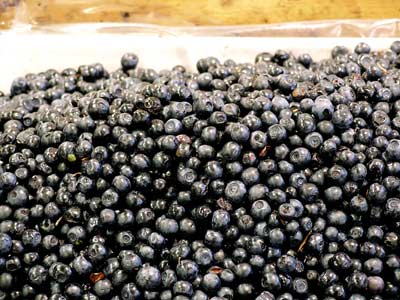
Different berries, including wild cranberry, the small blue-black fruit of a plant similar to the American blueberry but found commonly in northern Europe. These have more flavour than blueberries and are smaller, but are otherwise very similar, with the same silvery bloom. They are good for pies and jams (US: jellies). They are known by many names including bilberry, blaeberry, whinberry and whortleberry.
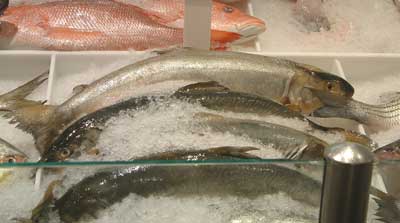
Char(r). An uncommon freshwater fish of the same family as salmon, trout and related to grayling and the vendace or powan, found in the rivers of northern Europe, north western United States and Canada. One variety of char migrates from the rivers like salmon. They have a steely blue-grey back with salmon-pink speckles on the sides, and a red underbelly. They have sweet firm flesh which varies from white to pink, dependent upon its own diet, and with good flavour, some say better than trout, being something like a cross between trout and salmon. The Inuit have many names for char(r), depending on the season, the age, and the maturity, as the Japanese do with tuna.
Hulled barley is barley from which only the outer husk has been removed, this is the most nutritious form in which barley is found.
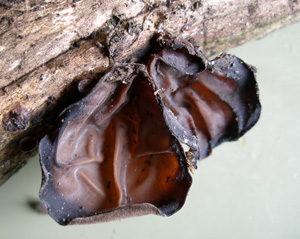
Judas's ear fungus, often found dried. Dried or fresh they should not be fried, as they explode, but stewed with other ingredients.
Hundreds and thousands, (US: sprinkles) are used to add colour or sugar in food preparation. They are tiny pieces of coloured sugar, usually in the form of short strands, used for decorating cakes and desserts.
A classical, large, orange variety of pumpkin, good for pumpkin pie.
Chinese preserved eggs. Eggs are covered with lime, salt and ash and buried in shallow holes for 100 days. They are then served uncooked with a sauce of soy sauce and chopped ginger.